Elizabeth "Betsy" Mathies
A nonprofit fundraiser supporting
Movement Disorders FoundationBetsy Mathies: From Living With Parkinson’s to Driving Research
$17,700
raised by 18 people
$50,000 goal
in 2 months left
1
match
Live
 “Life isn’t fair."
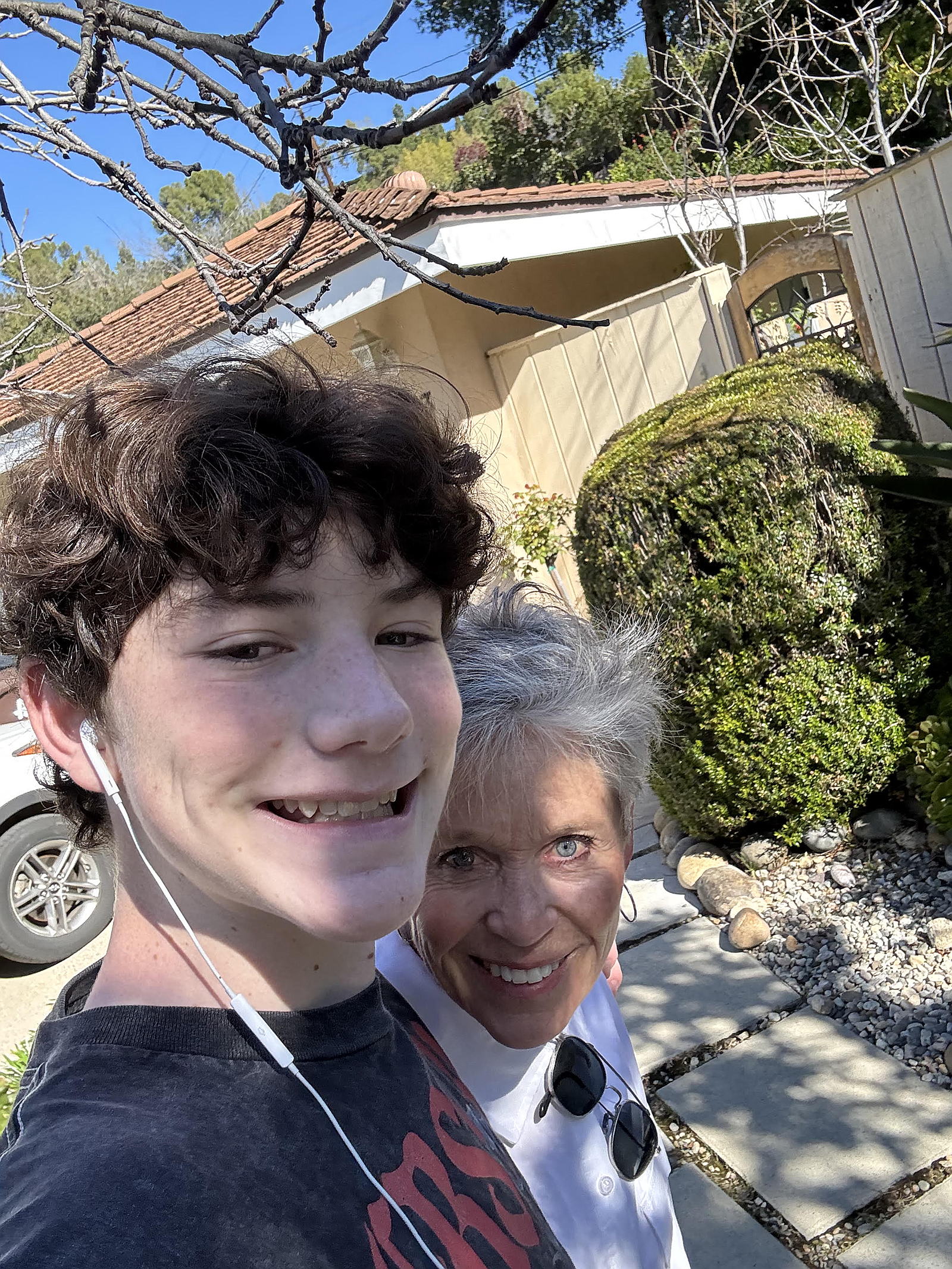
It wasn't exactly inspirational advice, but it was something Betsy Mathies' parents taught her growing up. Bad things happen. Good things happen. Sometimes you get lucky, sometimes you don't. When something unfair happens, you deal with it and keep moving.
So when Mathies was diagnosed with Parkinson's disease in January 2012, she didn't spend much time asking, “Why me?” She simply thought, These are the cards I've been dealt.
Her symptoms began around 2010, and she started seeing movement-disorders specialist Dr. Rajeev Kumar in 2011. Initially, he suspected dystonia.
“I cried my eyeballs out,” she recalls. “And then, for about 10 years, I really didn't cry about it again.”
Part of that response reflected her personality. Another important factor was finding a community that helped her understand how to live with Parkinson's.
Helping Others Find Their Footing
Mathies met Diane Cook, who developed PD Self, a program designed to help people newly diagnosed with Parkinson's. After participating, Mathies became a facilitator, spending four or five years helping others navigate the early stages of the disease.
Her goal was simple: help people be less afraid.
PD Self taught participants how to understand Parkinson's, work with their physicians, recognize the importance of exercise, and cope with uncertainty. It also connected them with others who understood what they were experiencing.
Mathies saw how profoundly Parkinson's could affect relationships, finances, independence and emotional well-being. Her message was straightforward: You don't have to borrow trouble from the future. You can live your life today.
For many years, she did exactly that. She even spoke to thousands of people at Red Rocks during a fundraising event for the Colorado Neurological Institute.
“I grew up here in Colorado, and I never imagined I would ever be standing on this stage,” she remembers. “And I joked that it was too bad it took Parkinson's to get me there.”
 When Parkinson's Changes the Rule
Parkinson's, however, doesn't stand still.
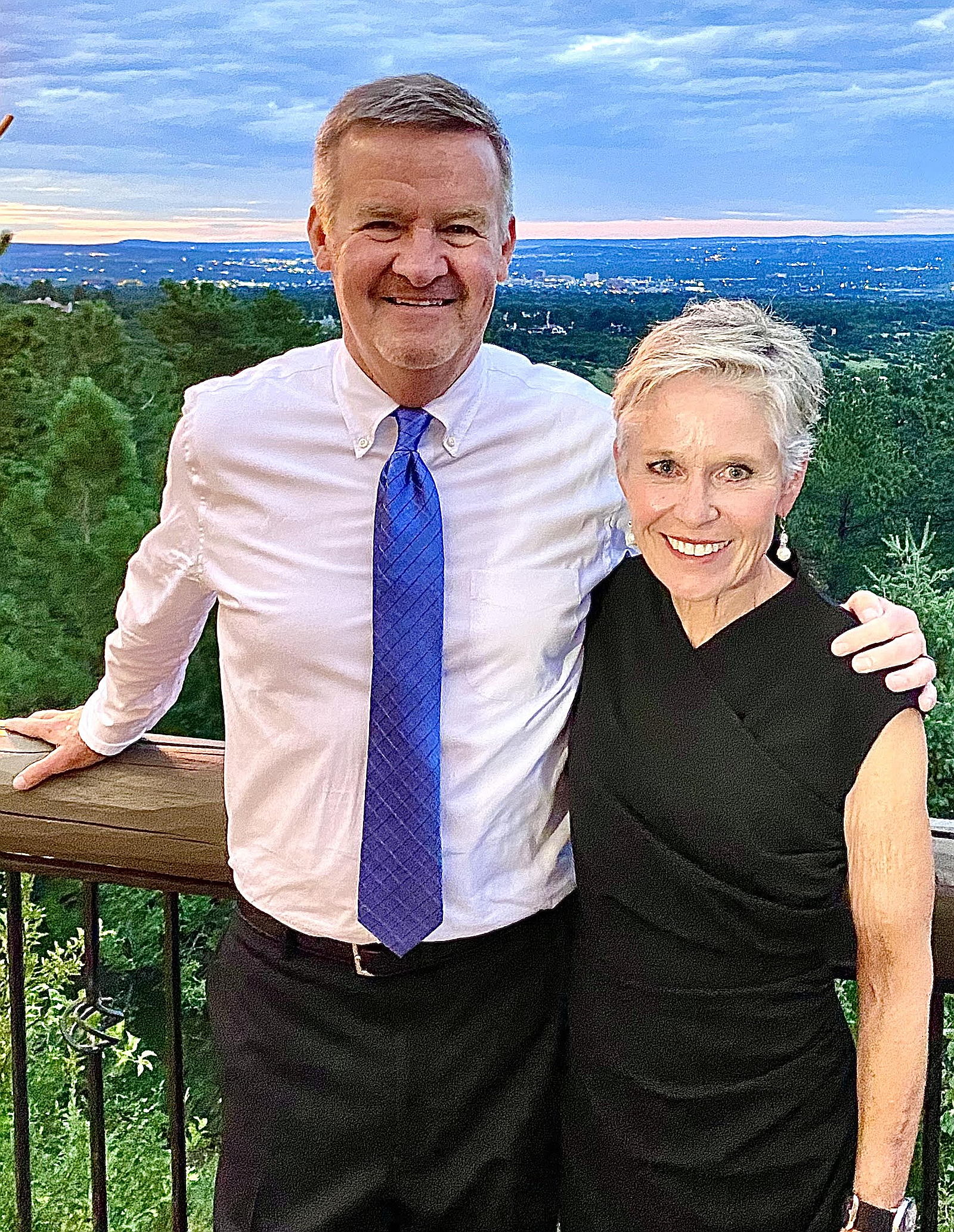
Today, everyday activities can demand considerable effort. Mathies describes mornings that begin with seven or eight pills, followed by the challenges of applying eye makeup safely, showering without slipping, managing a curling left foot and toes, walking differently, and struggling with buttons.
“Some mornings I've got the moves like Jagger. Some mornings I don't.”
For Mathies, that captures an important reality: Parkinson's isn't an occasional inconvenience. It is the routine. Every day.
The disease affects everyone differently. Some people experience tremor; others struggle more with balance, stiffness, cognition, speech or swallowing. Parkinson's can affect mobility, independence, sleep, communication and quality of life.
Mathies recalls an accident on an airplane and, a few months later, a fall that resulted in a broken rib. When friends offered possible explanations, she finally told them, “I appreciate everything you're saying. But my disease is progressing. I'm losing my balance.”
The experience reinforced how often Parkinson's is misunderstood—not just as tremor, but as fear, lost confidence and the effort required to move through daily life.
From Living With Parkinson's to Changing It
After 16 years with Parkinson's, Mathies says her perspective has changed.
“For many years, I had been focused on helping people live with Parkinson's. And that matters. It matters enormously. But after 16 years, I'm at a different point. I'm more pissed off. And I'm ready to get in the game.”
“I want us to figure out how to stop it.”
Mathies wants a cure. If that isn't immediately possible, she wants treatments that can slow or alter disease progression—disease-modifying treatments, not simply medications that manage individual symptoms.
That is why she supports the Movement Disorders Foundation (MDF) and its Young Investigator Pilot Grant (YIPG) program. YIPG helps early-career researchers test promising ideas, generate preliminary data and build toward larger research efforts.
For Mathies, progress happens incrementally: an idea, a hypothesis, a pilot experiment, preliminary data, more research—and perhaps, ultimately, a treatment that changes someone's life.
“I don't want Parkinson's to be the disease that defines the rest of my life,” she says. “And I certainly don't want it defining the lives of the people who are diagnosed after me.”
“I can't cure Parkinson's myself. But I can help create the conditions in which someone else might.”
She hopes that someday, people receiving a Parkinson's diagnosis will hear: We know what this is. We know how to stop it. And we have a treatment.
“I would love to live long enough to hear those words,” Mathies says. “But even if I don't, I want to know that I helped make them possible.”