
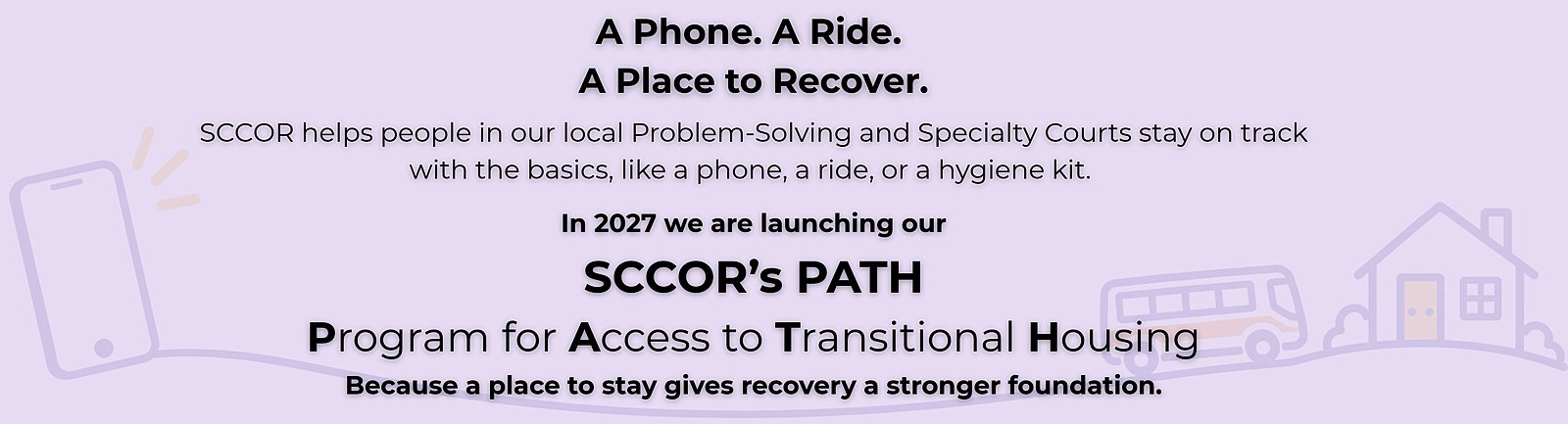
SCCOR helps people in our local Problem-Solving and Specialty Courts stay on track with the basics, like a phone, a ride, or a hygiene kit. We are preparing to launch Sober Living Assistance because no one can recover without a safe place to live.
A Phone. A Ride. A Bed to Get Sober.
Picture a Monday morning. Someone walks out of jail with no phone, no ride, and nothing but the clothes they’re wearing. Their Problem Solving or Specialty Court program requires check-ins, drug tests, treatment, and possibly a bed at a sober living home. The court can order every bit of it. It can’t pay for any of it.
Some enter the program to stay out of jail. Others, to get their children back. Different starting points, same problem: miss a call and you miss a check-in, miss a ride and you miss treatment. One missing piece can end your ability to stay in the program.
That’s the gap SCCOR was built to fill. Judges, attorneys, and court staff in the 4th Judicial District started SCCOR in 2020, and we step in fast when no other resource will.
Now we're taking on the hardest cost: Sober Living
In 2027, we are introducing our newest program, PATH — the Program for Access to Transitional Housing.
When sober living is part of a court treatment plan, it isn’t optional. Court coordinators tell us participants regularly lose a bed, or never get one, because of cost. On October 1, the federal government began clawing back Medicaid payments from homes that had used them to cover housing and board — costs Medicaid isn’t meant to pay for — and some homes had relied on that money to keep beds open. Sober living costs have already risen 13.3% in the past year.
SCCOR is stepping in. PATH will pay sober living costs directly to the home, week by week, up to $800 per person, so getting clean doesn’t depend on who can cover the bed. Our board has committed $5,000 from our reserves to begin with a 3-month trial period.
And our original work continues.
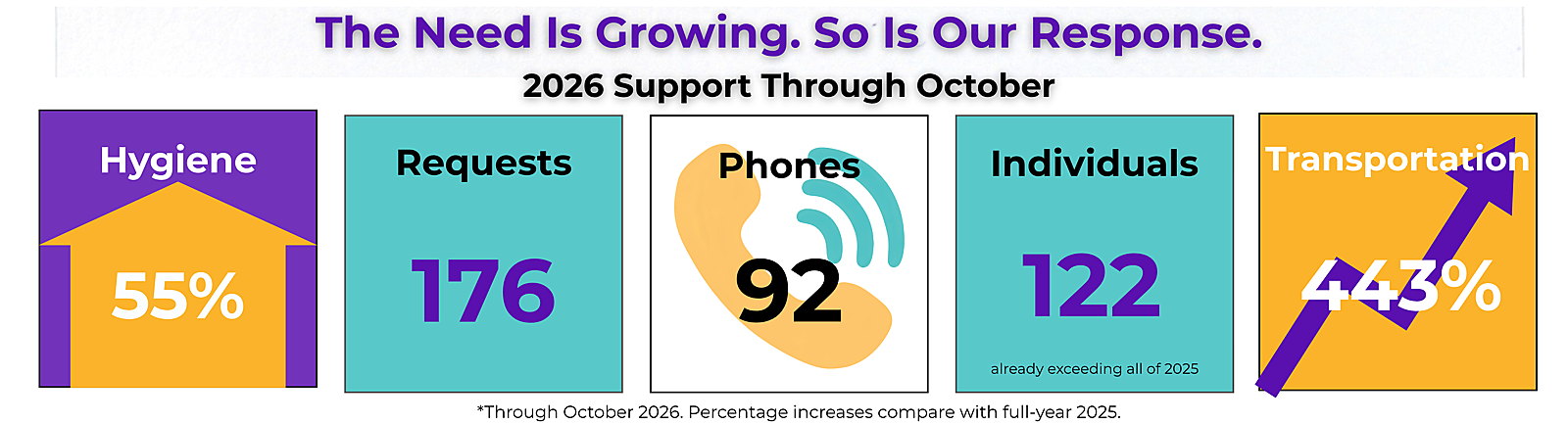
Our Direct Support Program keeps providing the phones, rides, hygiene kits, and other essentials to keep people connected.
Give today. 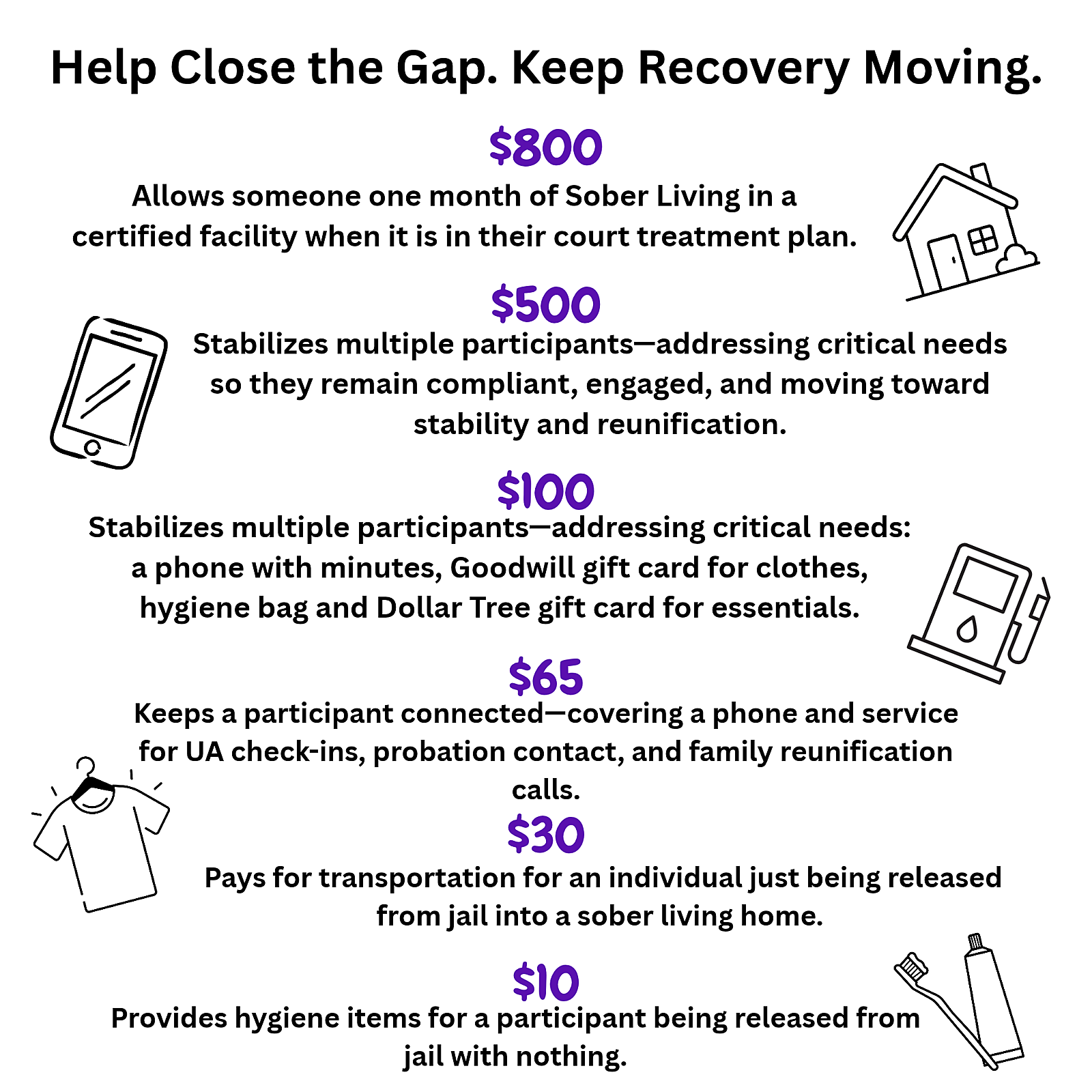 Become a monthly donor. $25 a month keeps a phone, a ride, or a hygiene kit available when someone needs it.

New monthly gifts are matched dollar-for-dollar for the first month, up to $100, while Colorado Gives matching funds last. Donate early to match your gift!

Studies demonstrate that Problem-Solving Courts reduce jail and prison costs.
Problem-Solving Courts can also be known as specialty, treatment, collaborative, or accountability courts and can be criminal or non-criminal courts for adults, children, and families. Problem-Solving Courts were developed in the 1990s as an innovative response to address specific needs and problems of offenders that were not or could not be adequately addressed in traditional courts, such as addiction, mental illness, and domestic violence. Problem-Solving Courts seek to promote outcomes that will benefit not only the offender but the victim and society as well. Problem-Solving Court models have been shown by a growing body of research to be an effective means of reducing substance abuse, managing mental illness, and increasing the likelihood that people will remain in recovery and reintegrate into their communities as productive and contributing members.
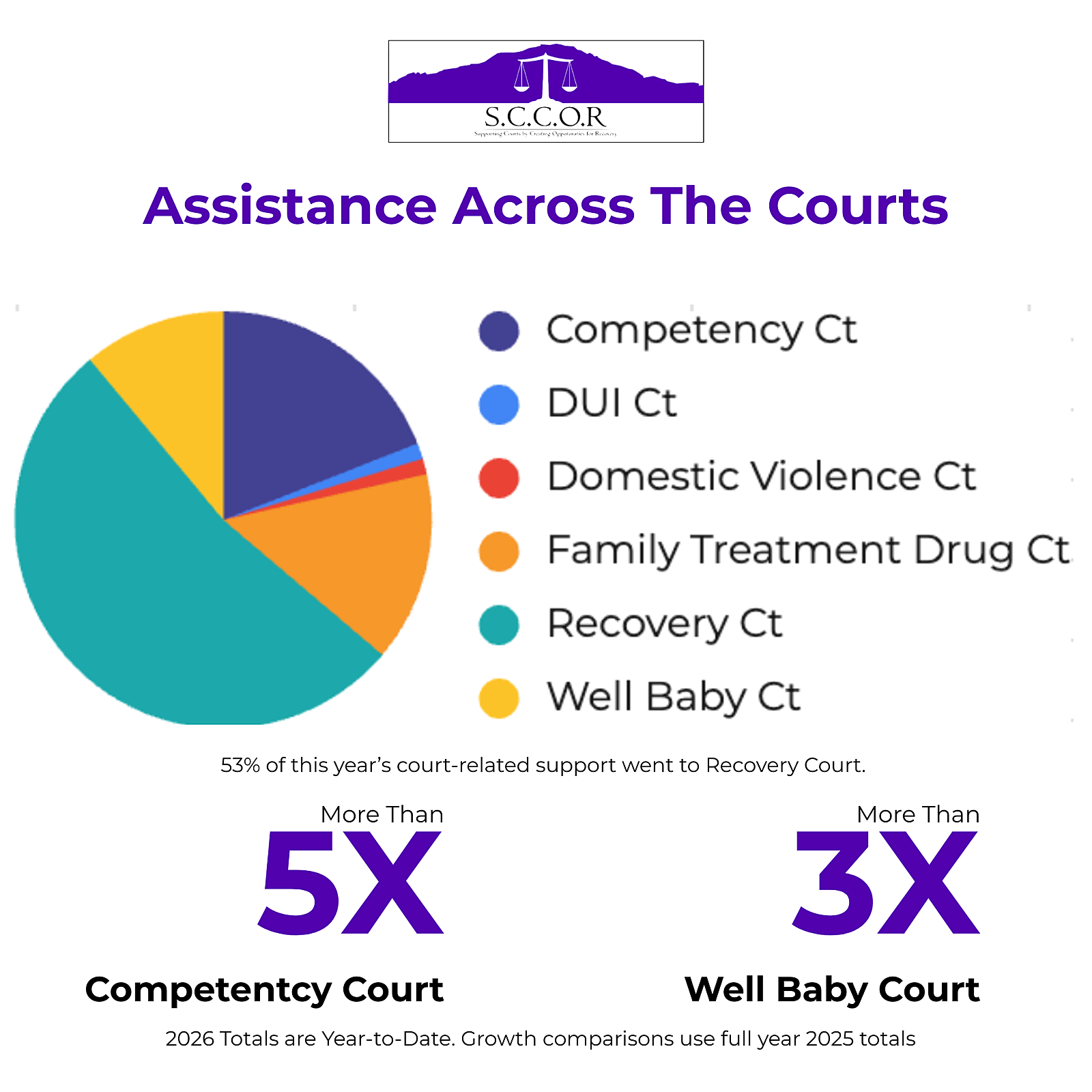 The 4th Judicial District currently has five Problem-Solving Courts.
Below are the courts where we offer assistance.
Recovery Court
Domestic Violence Court
Family Treatment Drug Court
DUI Court
The 4th Judicial District currently has three Specialty Courts
Below are the courts where we offer assistance.
Well Baby Court (WBCT)
Truancy Court - Youth Educational Support System (YESS)
To learn more about Problem-Solving Courts in the 4th Judicial District
Problem-Solving Courts